
Carnegie Hall Stage Elevator Restoration
- Discontinued hinges replaced
- Doors back in service
- Carnegie Hall
Engineered replacement hinges brought Carnegie Hall's stage elevator doors back into service.
- 1,000+
installations over 10+ years
- 24/7
support for managed-service clients
- Excellent
Rated 4.9/5 by 110+ NYC corporations
- 7 Active Teams
Operating throughout New York
1,000+ installations over 10+ years · Doors and hardware engineered and fabricated in-house · Licensed and insured: NYS DOS Article 6-D license no. 12000328718 · 24/7 support for managed-service clients
Project at a glance
A landmark hardware design project for Carnegie Hall's Capital Projects Team.
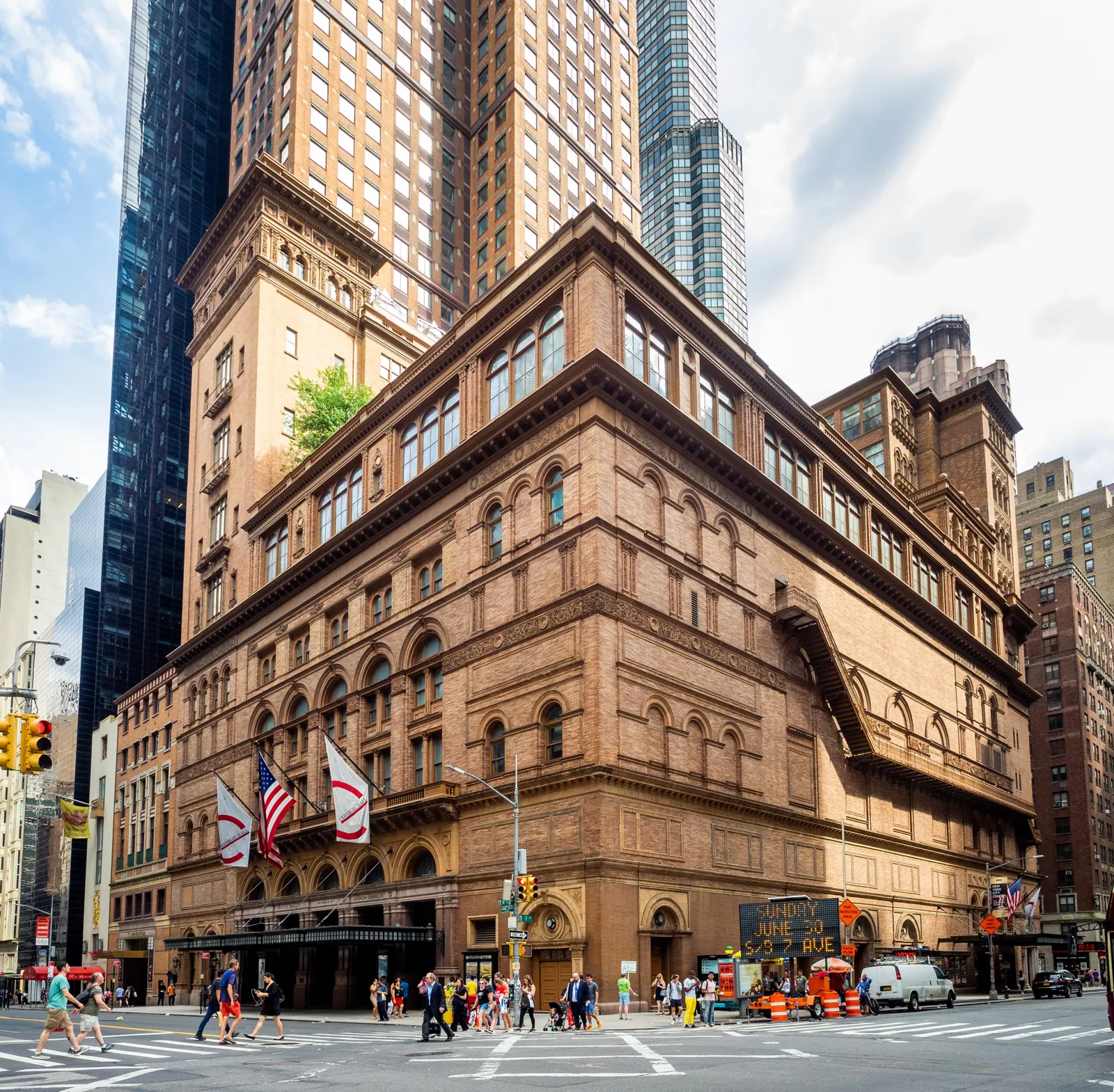
- Client / sector
- Carnegie Hall, Capital Projects Team · cultural institution
- Location
- Midtown Manhattan
- Building type
- Landmark concert hall
- Asset
- Stage elevator doors
- Problem
- Failed, discontinued hinge system; elevator doors inoperable
- Scope
- Custom-engineered replacement hinge matching the original design
- System layer
- Physical hardware: the door layer that access control depends on
- Compliance
- Landmark compliance requirements met
The challenge: a failed part that no longer exists
The stage elevator doors had stopped working, and the part that failed could not be bought again.
The original hinge system had failed and was discontinued. Without it, the elevator doors were inoperable.
No replacement on the market
The system was out of production, so there was nothing to order.
The original design had to stay
Any new part had to match the existing design in a landmark building.
Redesign was the disruptive option
Changing the opening to suit a modern part would alter historic fabric and could bring new approvals.
Operational equipment
A stage elevator is part of how a working hall runs, so its doors have to be dependable.
Discontinued parts are common in historic buildings. Hardware outlives its manufacturers, and a landmark's design cannot simply be swapped for whatever is in a current catalog.
Our approach
We engineered a new part to the original, so the opening and its design could stay as they were.
- 01
Study the failed system
The original hinge set the form and function the replacement had to reproduce.
- 02
Engineer the match
We custom-engineered a hinge to match the original design.
- 03
Design for compliance
The replacement was designed to meet the building's landmark compliance requirements.
- 04
Restore operation
The new hinge returned the elevator doors to full function.
Engineering a part in-house turns a dead end into a fix. It avoids a redesign of the opening, and the building keeps its original detail.
What we installed
A discontinued hinge replacement: one custom-engineered hinge for a system no one makes anymore.
| Component | Specification | Why it matters |
|---|---|---|
| Replacement hinge | Custom-engineered to match the original | The original system is discontinued |
| Design match | Form and appearance follow the original | Preserves the elevator's historical integrity |
| Compliance | Meets landmark compliance requirements | No redesign of historic fabric |
| Door operation | Elevator doors returned to service | Full function restored |
The result
Full function restored to the stage elevator doors, with the hall's historical integrity preserved.
Doors back in service
The stage elevator doors operate fully again.
Original design kept
The hinge matches the original, so the restoration does not read as a modern repair.
Landmark compliance met
The replacement meets the building's landmark requirements.
We engineered the part ourselves, so Carnegie Hall had one company accountable for getting the doors working again.
Request a site assessment (on-site or virtual) · Call 917-473-8077
Related services
The same engineering supports access control and long-term maintenance in historic buildings.
Commercial door repair and installation
Hinges, locks, strikes and readers specified as one system.
Cultural institution and venue security
Discreet systems for halls, theaters and museums.
Maintenance and legacy modernization
Upgrades that keep existing hardware working with new technology.
Related project
FAQs
Carnegie Hall stage elevator restoration: FAQs
Short answers on discontinued hardware in landmark buildings.
What was wrong with the Carnegie Hall stage elevator?
What was wrong with the Carnegie Hall stage elevator was a failed, discontinued hinge system. Without it, the elevator doors were inoperable.
How do you replace a discontinued hinge in a landmark building?
You replace a discontinued hinge in a landmark building by engineering a custom part that matches the original design and meets landmark requirements. That avoids redesigning the opening and altering historic fabric.
Did the restoration change the original design?
The restoration did not change the original design. The custom hinge was engineered to match it, preserving the building's historical integrity.
Can you engineer other discontinued door hardware?
Other discontinued door hardware can often be engineered rather than replaced with a new opening. Our Door Division, led by James Long, designs and fabricates tailored hinges, locks and doors in-house.
Does a hinge replacement matter for access control?
A hinge replacement matters for access control because a door that sags or binds will not latch reliably. Every lock, strike or reader depends on the door closing true, which is why we treat door hardware as part of the access control system.
Facing obsolete hardware in a historic building?
We engineer the fix and keep the building's design intact.