A regular security camera turns a license plate into a glowing white smear after dark.
That failure is why most buyers end up here. You need plates read cleanly at a gate, a loading dock, a parking entrance, frame after frame.
We’ll compare five of the most-cited options, show where each fits, and flag a twist: two of the names below are something other than dedicated LPR cameras.
Our Top 3 Picks
Best Overall: Axis
Best for Cloud Access Control: Brivo
Best Value Capture: NSC-LPR-832-BT1
1. Axis LPR-Enabled Cameras
Best overall LPR camera, and the best choice for high-speed and enterprise-grade deployments.
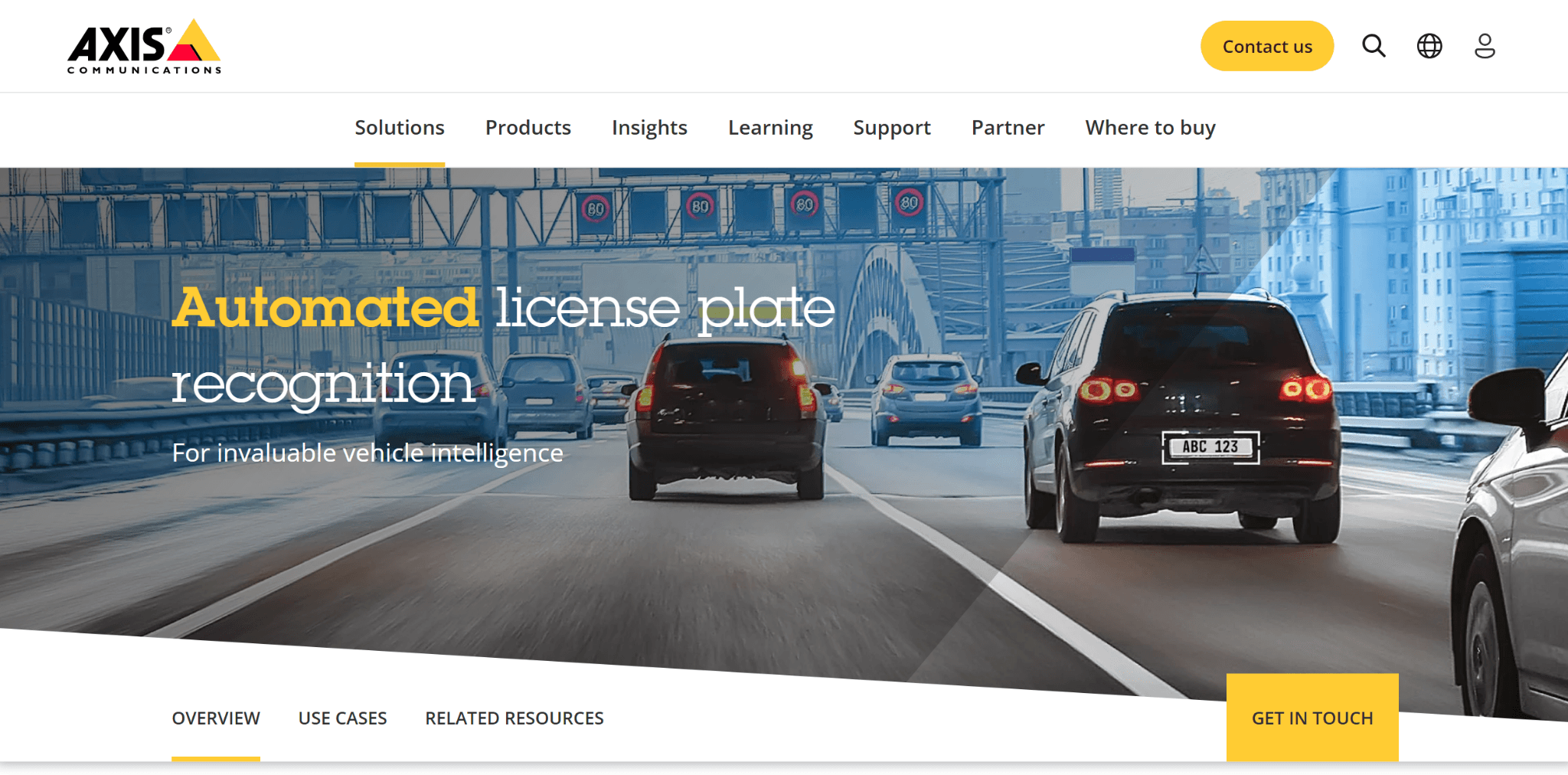
Axis sits at the top for a simple reason: their LPR cameras are engineered around the plate from the optics up.
The Q1800-LE reads vehicles moving up to roughly 155 mph at around 100 meters, while the P14 "Verifier" kits handle slow-speed gates and parking with plate logic running on the camera itself. Basic allow/block lists and gate triggers need no separate server.
What you pay for is engineering that removes guesswork from exposure, IR, and shutter timing, the variables that sink cheaper setups at night.
It's overkill for a single driveway. For a logistics yard, campus, or multi-site portfolio that needs plates read the same way every time, few brands match it.
Features
Purpose-built LPR optics and IR: The Q1800-LE and P14 Verifier kits ship with lenses, shutters, and infrared tuned specifically for plate capture, so they read cleanly in conditions that wash out general cameras.
High-speed and long-range capture: The Q1800-LE handles vehicles up to roughly 155 mph at distances near 100 meters, which suits highways, toll lanes, and fast entrances.
On-camera plate verification: Axis License Plate Verifier runs lists and triggers gates or alarms directly from the camera, cutting the need for a dedicated ALPR server on smaller sites.
Open integration: Standard APIs and ONVIF support let the cameras feed third-party ALPR platforms and most major VMS and access systems, which matters in mixed-vendor buildings.
Pros
Reliable night reads: Integrators consistently report the dedicated models simply work for plates after dark without hours of exposure tuning.
Genuine range and speed: Long-range IR and image stabilization hold up on fast, vibrating, or distant traffic where most cameras give up.
Flexibility: You can run Axis analytics on the edge or use the camera as a pure capture device for another ALPR engine.
Cons
Per-camera licensing adds up: License Plate Verifier needs a license on each camera, and large deployments feel that cost quickly.
Model-specific LPR: Several Axis deep-learning cameras leave Verifier unsupported, so you have to buy the right purpose-built unit rather than assume any Axis works.
Planning still required: Even tuned hardware rewards careful mounting height, angle, and field-of-view design; skip that and the premium price buys disappointing reads.
Score: 4.8/5
2. Brivo
Best for cloud-managed access control that turns a plate into a credential.

Here's the twist mentioned up top: Brivo doesn't make a camera. It's a cloud access-control platform that takes plate data from LPR-optimized cameras, through Eagle Eye Networks or Avutec, and treats the plate like a badge. A registered vehicle drives up, the gate opens, and the entry logs itself with video.
For property managers running garages or multi-site portfolios who already want cloud-managed access, that plate-as-credential model is clean and easy to administer.
The catch is scope. You still choose and buy the actual LPR cameras separately, the credential use case caps out around 10 mph, and recognition quality rides on whichever camera and partner engine you pair it with.
As an access layer it's excellent, provided slow-speed gate entry is the job.
Features
Plate as an access credential: Brivo assigns a vehicle's plate to a user profile so it functions like a card, with full lifecycle control to issue, revoke, or time-limit access.
Cloud-native administration: The whole system runs through Brivo Access in the cloud, which suits multi-site operators who'd rather avoid on-prem servers.
Flexible camera support: It works with ONVIF LPR cameras from brands like Axis or Avutec, so you're free to pick hardware that fits the site.
Video-backed entry events: Every vehicle event is logged with video, which helps with tailgating disputes and provides an evidence trail.
Pros
Clean credential model: Treating the plate as a first-class credential keeps vehicle access consistent with the rest of the Brivo system.
Easy to run: Access-control pros describe it as straightforward to maintain and troubleshoot for typical office and garage deployments.
Extensible by API: Teams on the API editions build their own automations and integrations beyond the native feature set.
Cons
You still design the camera layer: Brivo handles logic, not capture, so pixel-per-plate, field-of-view, and lighting planning remain your responsibility.
Slow-speed only: The plate credential is rated to about 10 mph, which fits gates and garages and leaves out roads or tolling.
Partner-dependent recognition: LPR quality and camera compatibility track Eagle Eye and Avutec, so switching engines later means re-architecting.
Score: 4.5/5
3. Hikvision LPR Bullets
Best for feature-rich entrance and exit analytics on a tighter budget.
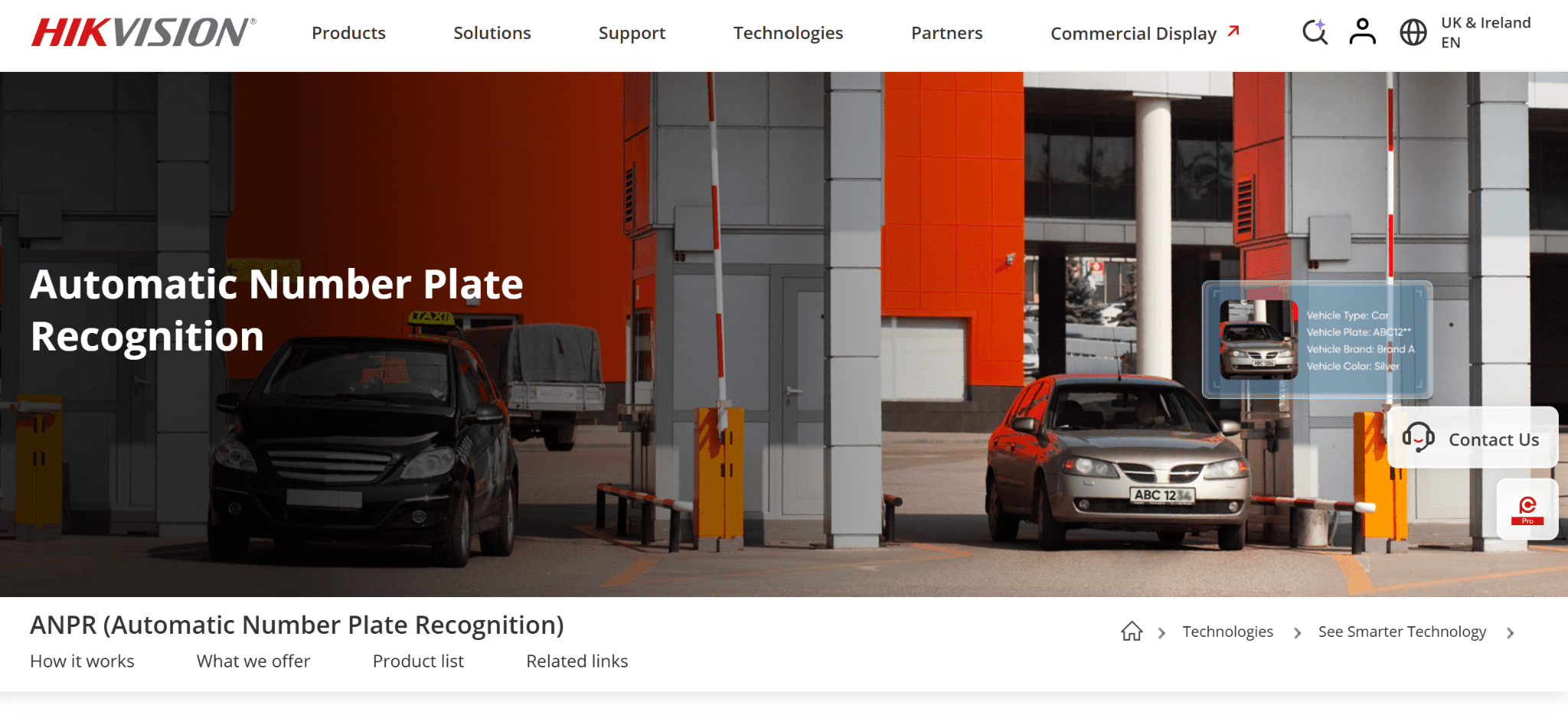
Hikvision's LPR bullets pack a lot into one housing. Beyond reading the plate, the deep-learning models pull vehicle type, color, and even brand, and several are tuned specifically for single-lane entrances and exits.
The TandemVu line pairs a zoomed ANPR channel with a wide overview channel, so you get the plate and the scene around the gate in one device. Low-light performance from DarkFighter and ColorVu is genuinely strong.
The complication is procurement: Hikvision raises data-governance and compliance questions in many public-sector, institutional, and security-sensitive environments, and some buyers are restricted from using it regardless of how capable the hardware is.
The hardware earns its reputation; the buying decision carries weight beyond the spec sheet.
Features
Deep-learning plate plus vehicle attributes: The bullets recognize plate numbers alongside vehicle type, color, and brand, which adds useful detail to parking and security logs.
TandemVu dual-channel design: Models like the iDS-2CD8A86G0 combine a zoomed ANPR channel with a panoramic overview channel, capturing both the plate and the surrounding gate area at once.
Strong low-light imaging: DarkFighter and ColorVu deliver clear color footage at night, which holds up well for the overview channel and contextual recording.
Built-in barrier control: Dedicated entrance/exit models include relays that connect straight to gate barriers, removing the need for separate I/O modules.
Pros
High capability per dollar: You get advanced analytics and solid imaging at prices that often undercut comparable Axis traffic cameras.
Tuned for the common case: Many models are purpose-set for slow-speed, single-lane gates, which matches how most commercial sites actually use LPR.
Mature ecosystem: Wide availability, NVR integration, and HikCentral support make these straightforward to source and deploy.
Cons
Compliance and procurement friction: Data-governance concerns restrict Hikvision in many government, institutional, and high-security settings, which can rule it out before capability even matters.
Built for slow single lanes: Most LPR bullets target low-speed entrances rather than multi-lane or high-speed roads, which limits where they fit.
Score: 4.3/5
4. NSC-LPR-832-BT1 (Nelly's Security)
Best budget plate-capture camera for small commercial sites and DIY builds.

The NSC-LPR-832-BT1 is the value pick, and it's honest about what it is: a plate-capture camera rather than an all-in-one reader.
It's a 2 MP Hikvision-OEM bullet with a long 8–32 mm zoom, 60 fps to cut motion blur, and a 165 ft night IR range, the imaging fundamentals that matter for clean plate shots. You pair it with Blue Iris or another ALPR stack to do the reading, list-matching, and gate logic.
For a driveway, a small lot, or a single commercial entrance on a budget, it punches above its price. Just go in knowing the 2 MP sensor wants a tight, single-lane field of view to perform.
Features
Plate-tuned imaging: The 8–32 mm motorized zoom and 60 fps frame rate line up with LPR best practice, a tight field of view with enough speed to freeze moving vehicles.
Strong night IR: EXIR infrared reaches about 165 ft and is set up to avoid plate washout, giving high-contrast plate images in the dark.
Blue Iris and ONVIF compatibility: Confirmed to work with Blue Iris and standard ONVIF NVRs, so it drops into existing DIY and small-business systems.
H-Series ecosystem fit: As a Hikvision-OEM camera it plugs into Nelly's PoE NVRs and the Hik-Connect/iVMS apps for simple setup.
Pros
Real LPR value: You get imaging fundamentals tuned for plates at a house-brand price well under Tier-1 traffic cameras.
Sharp on fast frames: The 60 fps capture improves your odds of a clean plate on a moving vehicle versus 30 fps cameras.
Approachable setup: Detailed guides plus PoE plug-and-play make it manageable for prosumers and smaller integrators.
Cons
Capture only: The camera images plates but leaves recognition, lists, and gate control to external software, so it's part of a build rather than a finished system.
2 MP ceiling: Two megapixels covers one tight lane well but leaves little room for wider scenes or multi-lane angles.
DIY-centric support: Documentation orbits Nelly's own ecosystem, so regulated or enterprise environments may want a brand with broader certifications.
Score: 4.0/5
5. Reolink
Best for general surveillance that occasionally needs to grab a plate.
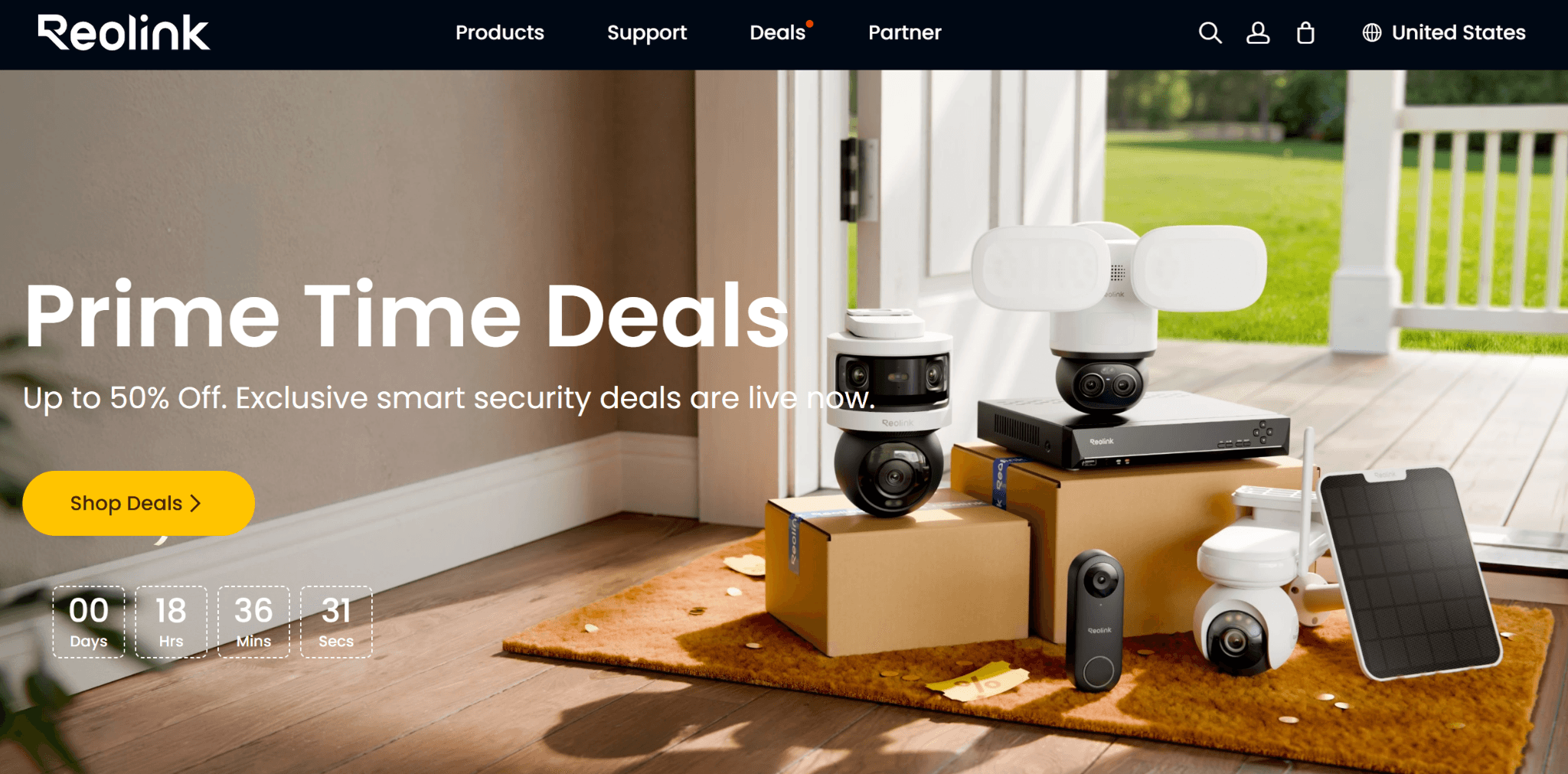
Reolink earns its place with a caveat: it isn't a true LPR camera, and the company is fairly upfront about that. These are general-purpose 4K/8 MP IP cameras with vehicle-detection AI that can read a plate in good daylight at short range, roughly 10 to 40 feet with the zoom dialed in.
The DIY community has built working ANPR pipelines around them using FastALPR, Plate Recognizer, and Home Assistant. The hard limit is night. Reolink's shutter tops out near 1/125, far slower than the 1/1000–1/2000 that reliable plate capture needs, and it lacks the HLC controls to fight headlight glare.
For everyday surveillance that occasionally needs a plate, it does the job. Anyone who needs LPR they can count on should look at the dedicated cameras above.
Features
General-purpose imaging with vehicle AI: Reolink's PoE cameras shoot 4K/8 MP and use on-camera AI to tell vehicles from people, which can trigger an external ALPR pipeline.
Daylight plate capture at short range: With a tight field of view, the cameras read plates within roughly 10–40 ft in good light.
Open streams for DIY ALPR: RTSP and FTP output let third-party platforms like FastALPR and Plate Recognizer pull frames and run the actual recognition.
Simple PoE installation: Affordable hardware and an easy app make these approachable for home and small-business setups.
Pros
Strong value imaging: High-resolution sensors and optical zoom deliver good daytime clarity for the price.
Active DIY community: Plenty of documented ANPR builds with Home Assistant and FastALPR give you a head start.
Versatile coverage: You get full general surveillance with color night vision alongside the occasional plate capture.
Cons
No native LPR engine: The cameras image plates but read nothing on their own; every part of recognition lives in external software.
Night capture falls short: A shutter capped near 1/125 and digital-only WDR leave motion blur and headlight glare hard to control after dark.
Short, daylight-bound range: Reliable plate distances sit in the 10–40 ft window in good light, well behind dedicated long-range bullets.
Score: 3.3/5
Comparison: 5 Best License Plate Recognition Cameras
Axis | Brivo | Hikvision | NSC-LPR-832-BT1 | Reolink | |
Dedicated LPR hardware | ✔️ | ❌ | ✔️ | ✔️ | ❌ |
Reads plates out of the box (no DIY ALPR build) | ✔️ | ✔️ | ✔️ | ❌ | ❌ |
Built-in access control (lists + gate trigger) | ✔️ | ✔️ | ✔️ | ❌ | ❌ |
High-speed capture (highway speeds) | ✔️ | ❌ | ❌ | ❌ | ❌ |
Reliable night plate capture | ✔️ | ⚠️ | ✔️ | ✔️ | ❌ |
Long-range capture (≈50m+) | ✔️ | ⚠️ | ✔️ | ⚠️ | ❌ |
Vehicle attributes (type / color / brand) | ❌ | ❌ | ✔️ | ❌ | ❌ |
Centralized multi-site management | ✔️ | ✔️ | ✔️ | ❌ | ❌ |
Budget-friendly | ❌ | ⚠️ | ✔️ | ✔️ | ✔️ |
Fits regulated / government procurement | ✔️ | ✔️ | ❌ | ❌ | ❌ |
How To Choose The Best License Plate Recognition Camera
These are the factors that decide whether your LPR performs, in roughly the order they make or break the result.
Match The Camera To How Fast Vehicles Move
This is the first fork, and the one buyers get wrong most often.
A gate or garage entrance is a slow-speed job that an LPR bullet or verifier camera handles well.
An open boulevard or highway needs a high-speed unit like the Axis Q1800-LE.
Buy for the wrong speed and the plates blur regardless of price.
Get The Pixels-Per-Plate & Field Of View Right
Recognition lives or dies on how many pixels land across the plate, which comes down to resolution paired with a tight field of view.
A 2 MP camera aimed at a single lane will outperform an 8 MP camera asked to watch a whole forecourt. High resolution rescues nothing if the field of view is too wide.
Plan For Night, Not Just Daylight
Most LPR failures happen after dark, when retro-reflective plates white out under IR and oncoming headlights flood the sensor.
Dependable night capture needs a fast shutter (around 1/1000 or quicker) and real glare control, which is exactly where general-purpose cameras come up short.
The lighting design around the camera matters as much as the camera.
Decide How Much The Camera Should Do On Its Own
Some units only capture an image and hand the reading to software like Blue Iris, others recognize the plate and trigger the gate on the edge, and platforms like Brivo turn the plate into an access credential.
Knowing which layer you're buying keeps you from paying for a "camera" that still needs a full system built around it.
Confirm It Integrates With Your Access Control, Cabling & VMS
A plate read earns its keep only when it opens the right gate, logs to your platform, and runs over cabling and power built to carry it.
This last mile, the access panels and structured cabling and the mounting alignment, is where a camera turns into an operating system rather than a spec sheet.
Weigh Compliance & Long-Term Support
Regulated and government-adjacent properties face procurement limits on certain brands, and Hikvision-based hardware (including OEM units like the NSC) can be ruled out before performance even enters the conversation.
LPR also drifts over time as mounts settle and lighting shifts, so someone has to keep it calibrated.
Read Back Through Those Factors & A Pattern Shows Up:
Most of them sit outside the camera itself.
Speed matching, field-of-view planning, lighting, access integration, cabling, compliance, and upkeep are all system decisions, and a camera bought in isolation leaves every one of them on your desk.
👉 This Is The Work Highline Takes On
We design and install complete LPR-enabled systems for commercial and institutional properties across New York City, engineering license plate recognition into a full access-control and surveillance setup, running the structured cabling that supports it, and maintaining the result so reads stay accurate for years.
You get a system engineered to perform from day one and supported for the long run.
Not Sure How The Camera Fits Your Property?
We'll assess your entrances and design the system around them.
Best License Plate Recognition Camera FAQs
What's the difference between ANPR and LPR?
ANPR and LPR describe the same technology, with automatic number plate recognition and license plate recognition used interchangeably. ANPR is the standard term across Europe, while LPR is more common in North America.
Can any security camera read license plates?
Any security camera can capture a plate image in ideal daylight at close range, but consistent reads need a camera built for the task. General-purpose models tend to miss plates at speed or after dark, which is why dedicated LPR cameras exist.
Are license plate recognition cameras legal for businesses?
License plate recognition cameras are legal for businesses to operate on their own property in most US states, since plates are treated as public information. Commercial operators should still post signage where required and handle stored plate data in line with local privacy rules.
How accurate is license plate recognition?
License plate recognition accuracy reaches roughly 98% under good conditions, meaning proper mounting, adequate lighting, and a tight single lane. Worn plates, sharp angles, glare, and weather like snow or heavy rain all pull that figure down.
Conclusion
So which is the best license plate recognition camera? It depends on the lane.
Axis owns high-speed and enterprise sites, Hikvision packs the most features per dollar where procurement rules allow it, and the NSC bullet delivers honest value for a single budget entrance. Brivo isn't a camera at all but a clean way to turn a plate into a gate credential, and Reolink belongs to general surveillance rather than serious plate work.
The thread running through every pick is the same: the camera is one part, and speed matching, field of view, night lighting, and access integration decide whether it performs.
That last part is where a plan beats a purchase. If you'd rather have those decisions made on-site and engineered into one working system, book a free appointment and we will design it around your property.