Motion sensors promise to keep watch. But most can’t tell the difference between a prowler and your dog chasing a fly.
The right system should catch what matters, ignore what doesn’t, and make you feel protected. To save you the testing and guessing, here’s a breakdown of the best home security systems for motion detection in 2025 – and what each one does best.
Our Top 3 Picks | ||
|---|---|---|
Best for DIY Homeowners and RentersSimpliSafe | Best for Smart Home Integration and AutomationVivint | Best for Subscription-Free Video MonitoringLorex |
1. Eufy E220 Indoor Cam
Best For: Homeowners and renters looking for a reliable, easy-to-install home security system with highly accurate motion detection and flexible monitoring options.
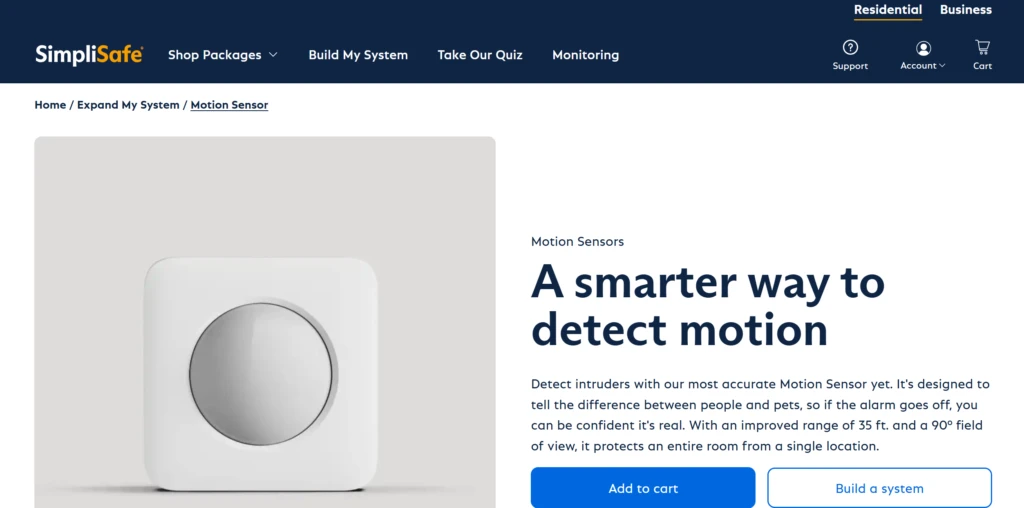
SimpliSafe remains one of the most trusted names in DIY home security. It’s straightforward to install, doesn’t tie you into long-term contracts, and gives you the flexibility to self-monitor or upgrade to 24/7 professional monitoring.
Its motion detection technology is one of the strongest selling points: the sensors accurately distinguish between people and pets (up to 60 lbs), cutting down on false alarms. The Gen 2 motion sensor offers a 90º field of view and a 35-foot range, meaning you can secure a full room with just one device.
When armed, it sends instant alerts to your phone or the monitoring center – so whether you’re home or away, you’ll always know what’s happening.
Features
Wireless setup with simple DIY installation – no hardwiring needed
Pet-friendly motion sensors up to 60 lbs
90º field of view and 35 ft detection range
Cellular backup ensures monitoring even if Wi-Fi or power fails
Smash-resistant keypad separated from the base station for added security
App control for remote arming/disarming and instant motion alerts
Voice assistant compatibility with Alexa and Google Assistant
Battery life up to 4 years
Pros
Quick and intuitive setup, ideal for renters or first-time users
Accurate motion detection with pet immunity minimizes false alarms
Reliable performance with cellular backup and strong monitoring options
Clear app interface and real-time alerts
Transparent equipment pricing and flexible packages
Excellent customer feedback on responsiveness and reliability
Cons
Advanced smart home integrations are somewhat limited
Motion sensors deactivate in “Home” mode, reducing indoor coverage
Some users report occasional sensor connectivity hiccups
Full functionality requires a paid subscription plan
Subscription costs may add up over time
Score: 4.8/5
2. Vivint
Best For: Homeowners who want a professionally installed, fully integrated smart home security system with highly customizable motion detection and 24/7 professional monitoring.
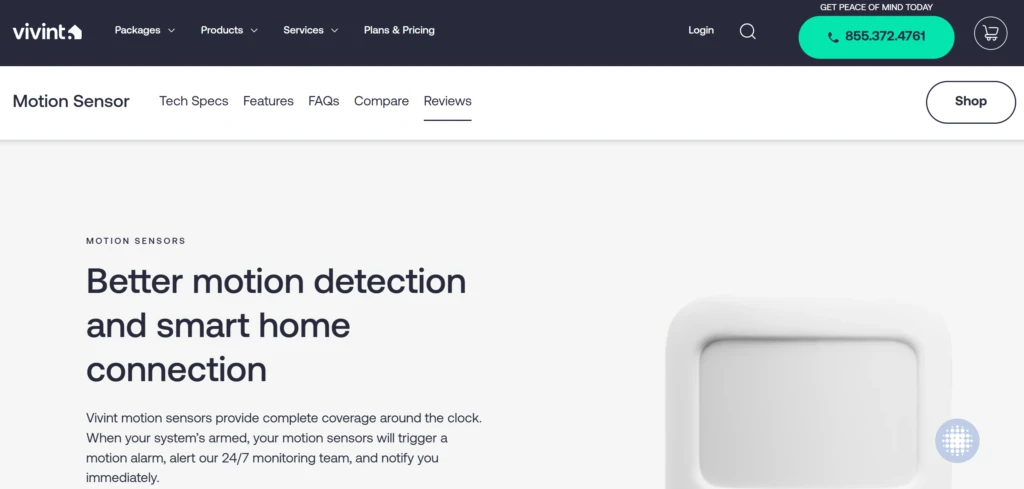
Vivint sits firmly in the premium tier of home security systems, combining reliable motion detection with full smart home automation. Its motion sensors use advanced passive infrared (PIR) technology to detect body heat and movement with impressive accuracy – covering up to 40 by 50 feet with a 75°–110° field of view.
When motion is detected, Vivint can do more than just sound an alarm: lights can turn on automatically, cameras can start recording, and the monitoring center is notified within seconds.
It’s designed for those who want total control of their security ecosystem from one place, whether through the Smart Hub™ or the Vivint app, and prefer professional installation handled by experts.
Features
PIR (Passive Infrared) motion detection for accurate day/night sensing
Adjustable pet-immune settings (35 or 55 lbs) to avoid false alarms
Wide 40’ x 50’ coverage area with 75°–110° field of view
Automatic lighting and thermostat adjustments when motion is detected
Real-time alerts and camera activation for instant visibility
Integration with Alexa, Google Home, smart locks, lights, and thermostats
Two-way communication via compatible cameras
24/7 professional monitoring with direct emergency dispatch
Battery-powered sensors with up to 5 years of life
Pros
Highly reliable motion sensors with wide coverage and pet sensitivity options
Full smart home integration and automation capabilities
Rapid, professional emergency response through monitoring team
Intuitive mobile app with live notifications and video playback
Customizable motion zones to reduce false triggers
Professional setup ensures optimal performance and device placement
Cons
Professional installation required (no DIY option)
Long contract terms and early cancellation fees
Higher upfront and monthly costs compared to DIY systems
Mixed reviews on customer service responsiveness
Occasional false alarms in specific lighting or temperature conditions
Score: 4.5/5
3. Google Nest Cam
Best For: Homeowners who want AI-driven motion detection, effortless smart home integration, and a sleek design that fits seamlessly indoors or outdoors.
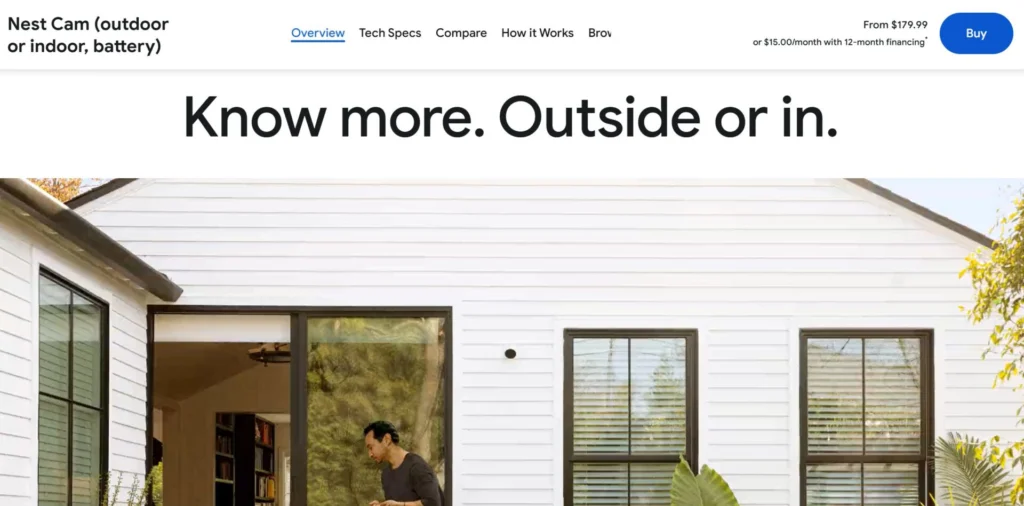
Google’s Nest Cam strikes a balance between smart detection, reliability, and design. Using on-device AI, it distinguishes between people, vehicles, and animals with impressive accuracy – cutting through the noise of irrelevant movement.
You can fine-tune its alerts using Activity Zones and get notifications straight to your phone. Installation is simple thanks to its magnetic mount and weather-resistant build, and the app gives you full control wherever you are.
While some premium features like familiar face detection and extended video history require a Nest Aware subscription, the camera’s baseline intelligence and 3 hours of free event recording still make it one of the smartest motion detection systems available.
Features
AI-powered motion detection differentiating people, vehicles, and animals
1080p HD video with HDR and night vision for clear visibility
Activity Zones for customizable motion alerts
Two-way talk via built-in speaker and microphone
Battery-powered, weather-resistant design for flexible placement
Local data processing with encrypted storage
3-hour free event history; 30–60 days with Nest Aware
Integration with Google Home and Amazon Alexa
Theft replacement program and magnetic mount for easy setup
Pros
Highly accurate motion detection powered by AI and local processing
Intuitive, user-friendly app and effortless setup
Works seamlessly with Google and Alexa smart home devices
Crisp video quality day and night
Customizable alert zones minimize irrelevant notifications
Privacy-first design with encrypted storage and local processing
Stylish design that blends into most homes
Cons
Advanced features locked behind a paid Nest Aware plan
Limited free video history (3 hours)
Higher cost compared to similar models
Battery version is slightly bulkier than competitors
Minor lag in alerts during high network load
Reliant on internet for full functionality
Score: 4.4/5
4. Lorex
Best For: Homeowners who want powerful, subscription-free video security with customizable motion detection and local storage.
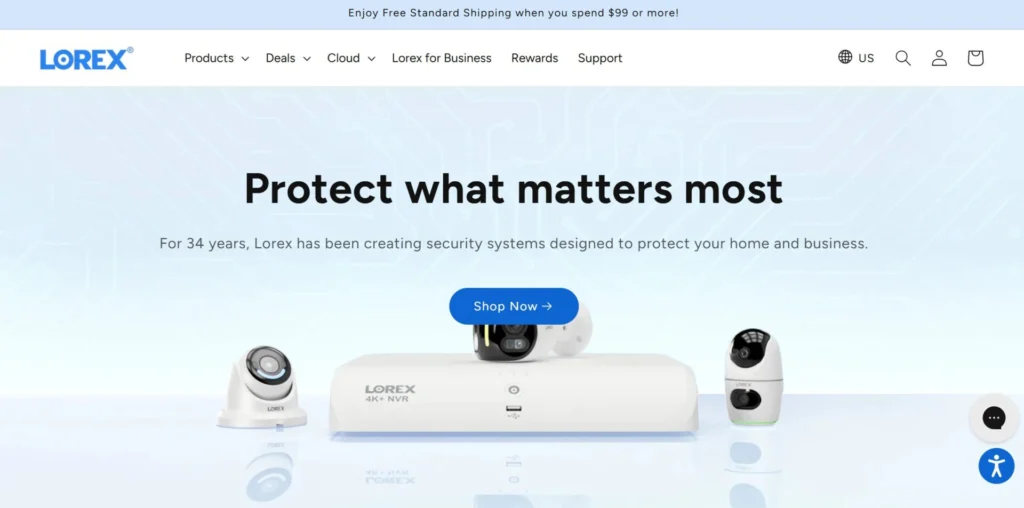
Lorex is best known for its flexible range of wired and wireless camera systems – and for giving users complete control without tying them to monthly cloud fees.
Instead of sending footage to the cloud, Lorex systems store everything locally on an NVR or DVR, which means you own your recordings and manage them directly.
When it comes to motion detection, Lorex offers multiple levels of sophistication, from standard motion sensing to advanced AI-based detection that can identify people, vehicles, and even faces. Smart Motion Detection Plus further refines this by distinguishing between motion types and eliminating unnecessary alerts.
For privacy-focused users who prefer to self-monitor, it’s a reliable, cost-effective choice.
Features
Multiple motion detection types: standard, PIR, person/vehicle, and Smart Motion Detection Plus
Customizable motion zones with adjustable sensitivity
Smart alerts for specific motion types and activity zones
Local NVR/DVR storage – no mandatory subscription or cloud fees
High-definition and 4K Ultra HD camera options
Two-way audio and listen-in capabilities on select models
Remote access via Lorex App for live monitoring and motion alerts
Deterrent options like motion-activated lights and sirens
Additional detection features (missing or abandoned object alerts)
Pros
No ongoing subscription costs – full ownership of footage
Highly customizable motion detection zones and alert settings
Advanced detection reduces false alarms (people, vehicles, faces)
Strong image quality, especially in 4K systems
Flexible range of wired and wireless configurations
App offers intuitive remote access and control
Privacy-focused approach with fully local storage
Cons
No professional monitoring option for emergency response
Setup can be challenging for first-time users
Some models have slower or less precise motion alerts
Occasional false notifications on non-smart detection cameras
Notification speed lags slightly behind systems like Ring or Vivint
Score: 4.3/5
5. Ring
Best For: DIY homeowners who want an affordable, expandable home security system with reliable indoor motion detection and seamless smart home integration.
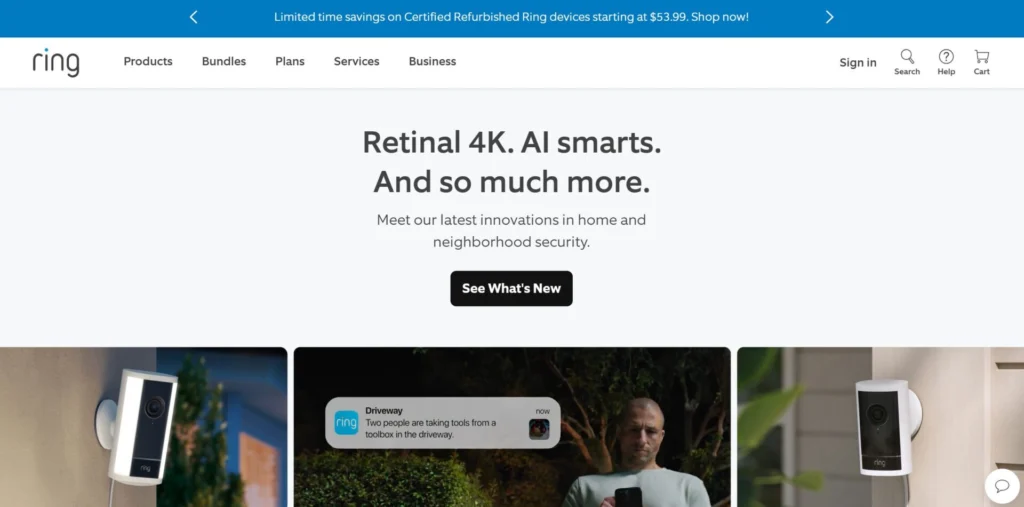
Ring has become synonymous with DIY home security, and its motion detection features are a big reason why.
The Ring Alarm Motion Detector uses passive infrared (PIR) sensors to detect heat and movement across a 90° horizontal field of view. When armed, it triggers alerts and can activate alarms, cameras, or Alexa routines. Pet-friendly settings, adjustable motion zones, and built-in entry delay options make it highly customizable for households with different activity levels.
While its sensors are designed for indoor use only, Ring’s ecosystem easily extends outdoors through cameras, doorbells, and smart lighting – all controllable from one intuitive app.
Features
PIR motion detection with adjustable sensitivity and motion zones
Pet-friendly detection for animals under 22 kg (approx. 50 lbs)
90° field of view with adjustable detection range
Works exclusively with Ring Base Station via Z-Wave connectivity
Entry and exit delay timers to avoid false alarms
Integration with Alexa for custom routines and voice control
Real-time app alerts and activity history
Expandable ecosystem with doorbells, cameras, and lights
Cloud video storage and Smart Alerts with Ring Protect Plan
Pros
Simple DIY setup with easy sensor pairing
Affordable system with flexible scalability
Strong smart home integration (especially with Alexa)
Responsive mobile alerts and automation capabilities
Pet-friendly features help reduce false alarms
Cloud-based video recording option for extended event access
Cons
Motion detectors are indoor-only and not weatherproof
Subscription (Ring Protect) required for full functionality and cloud storage
Privacy concerns related to data sharing with law enforcement have been raised
False alerts possible if placement or sensitivity isn’t fine-tuned
Battery life varies depending on activity and settings
Score: 4.2/5
Comparison: Best Home Security Systems for Motion Detection
Feature | SimpliSafe | Vivint | Google Nest Cam | Lorex | Ring |
|---|---|---|---|---|---|
AI person/vehicle detection | ❌ | ✔️ | ✔️ | ✔️ | ✔️ |
Pet-immunity options | ✔️ | ✔️ | ✔️ | ✔️ | ✔️ |
Indoor use | ✔️ | ✔️ | ✔️ | ✔️ | ✔️ |
Outdoor use | ✔️ | ✔️ | ✔️ | ✔️ | ✔️ |
Field of view | 90° | 75°–110° | 135° | Varies | 90° |
Pro monitoring available | ✔️ | ✔️ | ❌ | ❌ | ✔️ |
Self-monitoring via app | ✔️ | ✔️ | ✔️ | ✔️ | ✔️ |
DIY installation option | ✔️ | ❌ | ✔️ | ✔️ | ✔️ |
Requires long-term contract | ❌ | ✔️ | ❌ | ❌ | ❌ |
Smart home integration | ✔️ | ✔️ | ✔️ | ✔️ | ✔️ |
How to Choose the Best Home Security System for Motion Detection
When comparing the best home security systems for motion detection, the goal is to find a system that’s reliable, customizable, and suits your lifestyle. The right choice depends on how you balance accuracy, integration, cost, and convenience.
Here’s what to look for, and how each of the top contenders performs under these criteria:
1. Type of Motion Sensor
Most systems use Passive Infrared (PIR) sensors, which detect body heat and motion. These are ideal for residential settings but can vary in precision. Some brands add AI or dual-sensor technology to refine detection.
Best: Google Nest Cam (AI detection) and Vivint (PIR with smart automation) deliver superior accuracy with fewer false alarms.
Good: SimpliSafe also offers dependable PIR sensors with pet immunity.
Less Good: Ring and Lorex depend on traditional PIR tech – accurate enough, but not as adaptive without advanced camera add-ons.
2. Detection Range and Coverage
The wider the coverage, the fewer devices you’ll need to secure a room or yard. Range also affects reliability in large spaces.
Best: Vivint leads here with sensors covering up to 40×50 ft and a wide 110° view.
Good: SimpliSafe and Lorex both provide strong range (around 35–40 ft) for typical homes.Less Good: Ring’s indoor detectors have limited reach, best for smaller rooms.
3. Integration and Compatibility
Smart home integration is crucial if you use Alexa, Google Home, or other platforms. Seamless integration allows automated actions – lights turning on with movement or cameras starting to record instantly.
Best: Vivint integrates deeply with Alexa, Google, smart thermostats, and locks. Nest Cam naturally excels within the Google ecosystem.
Good: Ring works well with Alexa and has solid ecosystem expandability.
Less Good: SimpliSafe offers integration but is more limited; Lorex is largely standalone.
4. Installation and Ease of Use
DIY systems are budget-friendly but can suffer from poor placement or calibration. Professionally installed systems ensure optimal sensor coverage and fewer false alarms.
Best: Vivint (professional setup ensures precision).
Good: SimpliSafe and Ring make DIY installation easy and beginner-friendly.
Less Good: Lorex offers powerful systems but requires more technical skill.
5. Storage and Monitoring
This impacts both cost and security. Cloud-based systems provide easy access but come with fees; local storage ensures privacy but lacks live monitoring.
Best: SimpliSafe and Vivint provide professional monitoring with fast response times.
Good: Lorex offers subscription-free local storage – great for privacy-conscious users.
Less Good: Ring and Nest Cam rely heavily on subscriptions for full functionality.
6. Customization and Sensitivity Settings
Being able to fine-tune motion zones and pet immunity prevents constant notifications and false alarms.
Best: Nest Cam and Vivint offer the most flexible customization.
Good: SimpliSafe and Ring allow basic adjustments via app.
Less Good: Lorex can be highly customizable, but settings differ widely by model.
Bottom Line:
If you want professional-grade smart security, choose Vivint for its automation and coverage. For DIY flexibility and reliability, SimpliSafe is the best balanced option.
For AI accuracy and design, go with Google Nest Cam. Lorex fits privacy-focused users avoiding subscriptions, while Ring offers a budget-friendly, expandable ecosystem for everyday protection.
Ready To Secure Your Home Smartly?
We’ll help choose the best system based on your needs.
Frequently Asked Questions
Do motion detection systems work if my Wi-Fi goes down?
Yes, most systems still detect motion locally, but notifications or cloud recordings may pause until your connection returns. SimpliSafe and Vivint offer cellular backups to maintain alerts during outages.
How often should I test or recalibrate motion sensors?
Testing once a month is ideal. This ensures sensors are still responsive, batteries are fresh, and placement hasn’t shifted due to furniture or décor changes.
Can pets trigger false alarms on motion sensors?
It depends on the system. Brands like SimpliSafe and Vivint use pet-immunity technology, while Nest Cam relies on AI to ignore animals. Correct placement also helps reduce triggers.
What’s better – professional monitoring or self-monitoring?
Professional monitoring provides 24/7 emergency response and peace of mind but adds a monthly fee. Self-monitoring through apps is cheaper and more flexible but relies on your availability to act on alerts.
Conclusion
Finding the best home security systems for motion detection comes down to matching your setup with your lifestyle and level of control.
SimpliSafe is a go-to for renters or first-time buyers wanting reliable detection without contracts. Vivint stands out for homeowners who prefer professional installation and deep smart home automation.
Google Nest Cam brings AI precision and sleek flexibility for both indoor and outdoor coverage, while Lorex suits privacy-focused users who prefer local storage and no monthly fees.
Ring remains a strong choice for affordable, DIY home protection with solid app integration.
If you’re unsure which setup fits your space or priorities, book a free in-home appointment. A professional walkthrough helps you compare real motion coverage, sensor placement, and installation options before you commit.