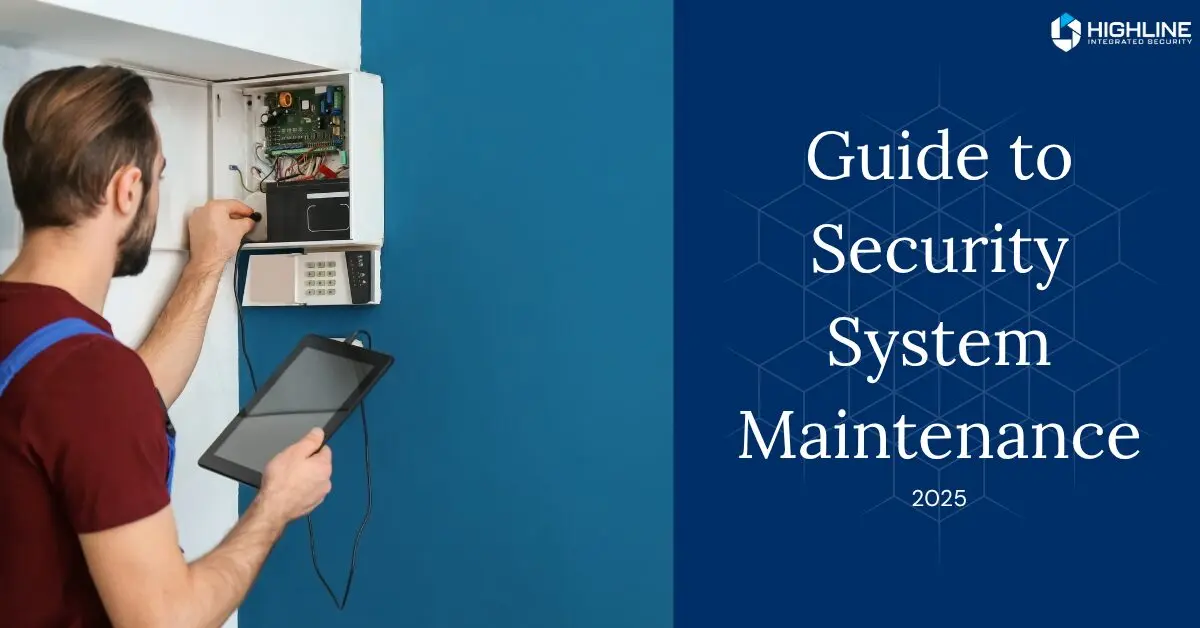
Security systems don’t run on autopilot. They rely on regular checks, clean components, up-to-date software, and a little planning to stay reliable.
Whether you’re managing a large commercial setup or just trying to avoid a false alarm at home, good maintenance isn’t optional – it’s the backbone of system performance.
We’ll break down everything you need to know about security system maintenance: what it is, how to do it properly, what it costs, and why it matters.
Key Notes
Preventive maintenance reduces costs by 15-40% and extends system life to 7-10 years.
Monthly visual checks and quarterly functional tests prevent most common system failures.
Software updates and battery replacements are the most neglected yet critical maintenance tasks.
Budget 8-12% of system value annually for maintenance with proper documentation for compliance.
What Is Security System Maintenance?
Security system maintenance covers everything needed to keep your system functioning at its best – no dead cameras, no glitchy access points, no outdated firmware.
It applies to alarms, CCTV cameras, sensors, locks, control panels, backup batteries, and the software behind it all.
There are two core maintenance types:
Preventive: Routine actions to keep systems healthy and catch issues early
Corrective: Fixing components that have already failed
A consistent maintenance plan improves reliability, extends system life, and lowers emergency repair costs.
Well-maintained systems last 7–10 years. Neglected ones, often half that.
Preventive Maintenance: Stay Ahead of the Problems
Preventive maintenance is about being proactive, not waiting until something goes wrong.
Common tasks include:
Monthly camera lens cleaning and repositioning
Alarm sensor tests (glass break, motion, door/window)
Checking backup battery charge
Verifying access control function
Quarterly software updates
Benefits:
Reduces false alarms
Improves uptime
Cuts long-term costs (by 15–40%)
Keeps systems compliant with insurance and regulations
Corrective Maintenance: When Things Go Wrong
Even the best systems fail eventually. Corrective maintenance kicks in when something breaks and needs fixing or replacing.
Typical issues include:
Cameras going offline
Access control readers failing
Repeated false alarms
Network outages
Water damage or power surges
Corrective maintenance is expensive, especially in emergencies.
What Needs Regular Maintenance?
Every part of a modern security system has its own checklist.
Cameras & Video Systems
Clean lenses and check for moisture or debris
Realign to cover correct angles
Test power supply and cabling
Ensure recording and remote access are working
Access Control
Test keypads, card readers, or biometric units
Check door locks, electric strikes, and maglocks
Confirm battery backups
Reprogram user credentials as needed
Alarm Systems
Test sensors (motion, window, glass break, fire)
Simulate alarm triggers to confirm response
Check control panel health
Update emergency contact numbers
Network & Power Infrastructure
Inspect routers, switches, and network connections
Test bandwidth (especially for IP cameras)
Verify UPS units and surge protectors
What Needs Regular Maintenance?
Software & Firmware Maintenance
Software is often the weakest link in security.
Essential tasks include:
Firmware updates for all connected hardware
OS and patch updates on management platforms
User audits (removing old or inactive users)
Cloud storage and backup verification
Home Security Maintenance vs. Commercial Systems
Home Systems
Monthly visual checks
Battery swaps every 6–12 months
Test remote access and alerts
App updates
Commercial Systems
Scheduled multi-point inspections
Backup server testing
Multi-user access audits
Coordination with IT and facilities teams
Maintenance needs scale with complexity. The more devices, locations, and users you have, the more critical proper planning becomes.
Integrating With IT & Smart Tech
Modern systems rarely operate in isolation. Maintenance now involves IT, cybersecurity, and building management systems.
Sync with smart locks, HVAC, and lighting
Monitor IoT sensor health remotely
Use AI to predict failures based on usage patterns
Run cybersecurity checks on all endpoints
Watch for:
Vulnerable default passwords
Devices without encryption
Outdated firmware
Documentation & Compliance
You can’t just do maintenance. You have to prove it.
Why Documentation Matters:
Meets insurance and legal standards
Speeds up warranty claims
Helps plan upgrades and replacements
Protects you during audits
What to Track:
Maintenance checklists
Logs of tests, cleanings, updates
Software version history
Incident resolution reports
Photos and timestamps
Tools like cloud-based logs or mobile inspection apps simplify this and keep records searchable.
Regulations to Know
NFPA 731: Guidelines for electronic security system upkeep
UL 294 & UL 1076: Access control system maintenance standards
NIST 800-171: Covers cybersecurity aspects of maintenance
ISO 27001: Applies to managed security environments
Industries like healthcare, finance, and government have even tighter requirements.
Budgeting for Maintenance
Maintenance Type | Avg Annual Cost | Expected Lifespan | Annual Downtime |
|---|---|---|---|
Reactive Only | $210 | 3–5 years | 27.4 hrs |
Preventive | $175 | 7–10 years | 12.1 hrs |
Predictive (AI) | $145 | 8–12 years | 7.3 hrs |
Set aside 8–12% of the system’s total value annually for maintenance. Prioritize high-risk components and critical entry points.
Need Help Maintaining Your Security System?
From checkups to audits, we keep your system sharp.
Frequently Asked Questions
How often should I check my security system?
Visual inspections monthly, full functional tests quarterly, and annual professional checkups are a good rule of thumb.
Do home and commercial systems require different upkeep?
Yes, commercial setups usually need multi-layered maintenance involving IT, compliance checks, and access management.
Is maintenance covered by warranty?
Sometimes. Many manufacturers require documented maintenance to honor warranties. Check your system’s terms.
Can I handle maintenance myself?
DIY works for small systems, but commercial setups (or anything involving fire/life safety) should be handled by a professional.
What’s the most common reason systems fail?
Neglected software updates and dead backup batteries. Simple stuff, but easy to forget.
Conclusion
Security systems aren’t just install-and-forget technology.
Keeping them reliable takes regular upkeep – whether it’s wiping down camera lenses, replacing backup batteries, testing alarms, or updating firmware.
The longer you put it off, the more it costs when something breaks. A solid maintenance routine keeps systems running, avoids false alarms, and protects the people and property that matter most.
Book a free consultation with us at Highline Integrated Security to talk through your current setup, maintenance gaps, or future upgrade plans.